The G.P.S. Leadership Framework: Goals, People, Systems

Your team doesn't follow your title. They follow you — how you lead yourself, whether your word holds up, and whether you actually know where you're going.
That's the real job of a leader. You decide which goals matter. You choose which systems get used. And people only follow a guide they trust.
This is what G.P.S. gives you: Goals, People, Systems — three things every project depends on, and one framework that shows you which one is holding your leadership back right now.
The G.P.S. Leadership Framework is a way of diagnosing your leadership across three dimensions — Goals, People, and Systems — so you know exactly which one is holding a project back instead of guessing.
Which of these 3 dimensions do you focus on first when you want to make a profit or get results in your non-profit organization?
Here are the 3 dimensions we teach in all our training programs: Goals, People, Systems — G.P.S.
Here's why it's called that. Think about an actual GPS in your car. It doesn't just tell you where you're going — it tells you where you are right now, who's in the car with you, and what route (what system) will get you there without wasting gas or time. That's exactly what leaders and project owners are missing. Not motivation. Not more hustle. A way to know where they stand on all three dimensions at once.
Most people default to focusing on money first. And look, you may say you focus on cash or profit first — but have you ever heard that a successful business isn't actually about the money? The money is a byproduct. It shows up when the other two dimensions are working.
And here at Project Leader Academy, we think that projects can be about making the world better — cleaning oceans, developing medications, building schools, creating new vehicles and communication systems, and much more. Yes, you need money to purchase materials, pay experts, and connect a team worldwide to make big things happen. But let me introduce you to our G.P.S. — Goals, People, Systems — framework, and let's see where the money fits into that.
This framework was built as a leadership framework first, long before it became a project framework. Any time you're leading people toward a result — a project, a team, a whole business — all three dimensions are in play, whether you've named them or not.

1. Goals: Stop Trading Time, Money, and Quality Against Each Other
What does winning actually look like on this project? That question is yours to answer, not your team's. They're waiting for you to define it clearly enough that they can get behind it.
You all know the golden triangle of constraints: Money, Time, Quality. That triangle only covers this one dimension — Goals. G.P.S. adds the two dimensions that actually determine whether the goal gets hit: the people who have to believe in it, and the systems that make hitting it repeatable.

Once you talk to people we can find out what problem to solve first. In our coaching, we help you to shift your belief system and find new perspectives on how to look at your constraints and make best-balanced decisions.
What is more important to you:
- Getting results or saving money?
- Spending time or spending money?
- Doing it alone or hiring a team?
- Spending the time and money or the final result?
- and so much more
There's no single right answer. But your team needs your answer. That's what makes you the guide instead of just another participant.
1.1. Quality Result
In our Project Leader Academy we teach you how to create a clear vision about the project outcome and how to share it with your team, your stakeholders, and clients, so that you get buy-in and their support.
We teach you a proven framework to plan execution so that you feel great with implementing and getting results faster, developing new ideas. Being German, high quality is always very important to me, and my international team has bought into that value. We had to learn that achieving excellence and high quality is a journey, and great communication is so helpful to keep it fun.
Our students confidently step up, take decisions, and set priorities faster. With our framework and programs, we've helped business owners and top managers all over the world get results they never dreamed of before. Everything is possible.
We've found that if you put your energy into visualizing your project, identifying the missing puzzle pieces, and setting the right intention, you'll find a solution for how to fill in the blank spots in your plan — whether that's project financing, missing experts, stakeholder support, or time. If your mind believes it, you can achieve it.
1.2. Money: Know What Game You're Playing
Here's the mistake almost everyone makes with money: they treat every project like it's the same money problem. It's not. Before you do anything else, you need to answer one question: what's the actual money goal on this project?
Because it's usually one of these:
- Financed — you need to go raise or secure the money before you can even start.
- Fixed budget — the money's already set. Your job isn't to find more, it's to stay inside the box you were given.
- Sold for profit — you're pitching this project, and it needs to make money, not just get funded.
A project is a unique endeavor. It's a one-time thing. There's nothing repeatable about it, and nothing about it repeats on its own — every project starts this money question from zero.
A few more questions worth asking, once you know which game you're in:
- Who actually controls this budget — and who has to sign off if it needs to move?
- If we go over, is there a reserve or contingency, or are we exposed?
- Are we spending money to buy back time, or saving money and accepting a slower timeline?
- What return do we need to show to justify this to whoever's funding it?
- Are we self-funding this, or do we need outside money — investors, a loan, a client's budget?
- If the number doesn't work, is scope what moves, or is price what moves?
Here's the truth about money problems: they're almost never actually about money. They're about not knowing which of these questions you're even supposed to be asking.
I've worked with sales managers, started businesses from nothing, financed real estate deals on fancy hotels. Same lesson every time: the money is out there. The skill is knowing which game you're playing, then showing people the value so they hand it over.
Two quotes I love:
"Nothing is impossible."
"Just remember — time is finite. Money isn't."
Read that second one twice. Most of us protect our money and burn our time like it's unlimited. Backwards.
1.3. Your Scarcest Resource
One of the scarcest resources we have is time. This is why learning to manage your own time, being respectful with your clients' and your team's time, is so important.
In our Project Leader Academy, we teach you time management and time planning skills, like estimating the duration of tasks, scheduling activities online, and creating a plan around your time schedule.
2. People: Lead Yourself Before You Lead Anyone Else
You can't guide anyone if you don't trust yourself to lead. Before your team follows your plan, they're watching how you handle pressure and whether you're steady when things go wrong. Lead yourself first. Then your team. Then your clients and stakeholders. Skip the first step and the rest doesn't hold — you can have the best goals and the smartest systems in the world, and people still won't follow if they don't trust the person holding the map.
Any business or project is about people and it starts with you. Who are the other people we need to learn to talk to and to engage with?
- Myself
- My Team
- My Stakeholders (Clients and others)
Before you can lead others, it's important to learn how to lead yourself. Get to know yourself, find what inspires you, and become a confident leader in both business and life. Remember to treat yourself and others with kindness. We're all at different stages in our journey, and when we come together, we can create something amazing.
Take a moment to reflect on how you talk to yourself. What kind of things do you say to others? How do you communicate with your clients? Are you a good listener? Do you truly understand them? And when it comes to your team and stakeholders, how do you communicate with them? It's worth considering these questions and finding ways to improve your communication skills.
The formula for leading is simple: Lead yourself, your team, your stakeholders. This is how you create great value and deliver great results for a very special, important stakeholder — your client.
This is why, in all our programs, we focus beyond teaching the technical aspect and the methodology — on supporting you in up-leveling your skillset for communication and leadership.
So what do you think is possible? What do you think about your client in a conflict, about others on your team, about possibilities and restrictions, politics and regulations, time and money?
What your mind can conceive, you can achieve.
As project leaders, we may or may not be the expert in the subject we want to build. As business owners, we need to learn to listen to experts efficiently and gather and process information systematically to get the best results.
How Do We Communicate Effectively With Ourselves, Our Clients, and Our Team?
2.1. The Habits That Build Trust
Our clients who love the culture of transparency and collaboration have implemented the following powerful concepts in their business:
- Open Leadership Feedback: Creating an environment where open and constructive feedback is encouraged is crucial for personal and team growth. Being able to provide and receive feedback in a positive manner helps everyone improve and develop their skills.
- Simple Communication Guidelines: Establishing clear and simple communication guidelines ensures that everyone understands how to effectively convey information, express ideas, and listen to others. It promotes clarity and reduces misunderstandings within the team.
- Well-Prepared Project Meetings: Conducting well-prepared project meetings sets the stage for productive discussions and decision-making. Having an agenda, setting objectives, and ensuring all necessary materials are available beforehand leads to more efficient and successful meetings.
- Higher Team and Self-Awareness: Encouraging team members to develop a deeper understanding of themselves and others, including their communication styles, such as DISC (Dominance, Influence, Steadiness, Conscientiousness), enhances collaboration and strengthens team dynamics.
- Active Empathy, Rapport Building, and Listening Skills: Actively practicing empathy, building rapport with team members and stakeholders, and actively listening to their concerns and ideas fosters a supportive and inclusive work environment. It improves relationships, fosters understanding, and promotes effective teamwork.
- Mindset Routines: Cultivating positive mindset routines, such as setting goals, practicing gratitude, and embracing challenges as opportunities for growth, helps individuals stay motivated, focused, and resilient, both personally and within the team.
- Team Roles in the Team Management System: Clearly defining and assigning team roles within a team management system allows each member to understand their responsibilities, strengths, and areas for development. This promotes accountability, coordination, and efficient task allocation.
- Shared Values: Establishing shared values within the team, using tools like the 9 Levels Value Profile, ensures a common understanding of what the team stands for and guides decision-making processes. It fosters alignment and a sense of purpose.
- Self-Discipline: Cultivating self-discipline is essential for staying focused, meeting deadlines, and effectively managing time and tasks. It involves setting priorities, avoiding distractions, and maintaining a strong work ethic.
- By focusing on these areas, individuals and teams can enhance their leadership skills, communication effectiveness, teamwork, and overall success in project management.
In our training and coaching programs, we teach essential leadership skills, measure behaviors, give feedback, and create personal leadership development plans. Our goal is to help you transform your leadership style based on over 20 years of executive training experience. We offer leadership training, high-potential leadership programs, and support in business growth and executive coaching. Our aim is to guide you towards becoming the best version of yourself.
3. Systems: What Gets the Work Done
Systems are how work gets done without you sitting in every meeting or checking every task. Your team can't build the system for you — that's your call too: the tools, the process, the rules everyone plays by.
Here we look at Processes, Structures, and Principles.
3.1. Three Processes Worth Getting Right
Let's talk about processes: sure, you may not have processes established for running a project, since a project is unique. If you start a new project, you may have processes for how you do things. How well are you organized? How do you organize your team? The workflow? Become more effective in your routines so you can spend more time communicating with people, thinking, sitting in silence, creating solutions, taking care of your body and mind, and enjoying the process of creating great results. Here are 3 types of processes we need to focus on:
- Communication processes — how information moves through your team. A shared Claude project where your team drafts stakeholder updates together, or an AI tool that turns a voice memo into a clean status report, can replace half your weekly meetings.
- Thinking processes — how decisions get made. AI is useful here for stress-testing a plan or listing risks you're too close to see. It can hand you options. The decision stays yours.
- Task/work-related processes — the actual doing. This is where AI saves the most time: a first draft of a project charter, a messy set of notes turned into a work breakdown structure, a stakeholder email drafted so you're not starting from a blank page.
None of it replaces you. It just clears the busywork so you have more time for what only you can do: read the room, make the hard call, be the person your team trusts.
3.2. Find the Structure That Fits You
How good are you at identifying patterns and understanding the complex structures of any organization, project, business, or charity? Do you prefer to work in a fixed structure or a permanently changing structure? Everybody has their zone of genius. Find out what's the best structure for you to thrive. Become more confident in understanding complex project structures and finding the missing puzzle pieces. Build a project organization and a WBS that works for you.
We teach you how to structure and organize yourself, your work, your team, your projects, your business.
3.3. Decide What You Stand For
Do you have any life principles? I firmly believe that having principles is crucial for individuals, teams, and businesses. By establishing straightforward guiding principles for yourself and your team, you can enhance productivity, achieve success, enjoy the process, feel empowered in decision-making, accomplish tasks, and create a greater impact and value.
Have you defined a set of personal principles for success? Have you discussed and agreed upon shared principles within your team? How about with your clients?
Principles are derived from values. I strongly encourage you to begin by identifying your values and creating a set of shared values as a foundation for establishing principles.
We support our clients with workshops creating exactly these kinds of principles. You can get support today with online training, consulting, coaching, and leadership assessments.
Communication: The Thread That Ties G.P.S. Together
One capability runs through every part of the G.P.S. framework, yet many leaders overestimate how well they use it: communication.
A goal only works when you can explain it clearly, create shared understanding, and confirm that everyone is working toward the same result. It is not enough to announce a target and assume people understand it.
- Do people know what success looks like?
- Do they understand why the goal matters?
- Can they explain the priorities in their own words?
Systems depend on the same skills. A process may look excellent on paper, but it fails when responsibilities are unclear, rules are open to interpretation, or nobody checks whether the process is actually being followed.
A rule hidden in a document is not a working rule. A decision nobody remembers is not a clear decision. A responsibility that has not been confirmed usually becomes a task that nobody owns.
The people dimension goes even deeper. Leadership is not simply about sending updates or giving instructions. It requires listening, asking useful questions, noticing concerns, giving feedback, resolving misunderstandings, and following up on agreements.
This is where leaders should be honest with themselves.
- How well do you listen when someone disagrees with you?
- How often do you check what the other person understood?
- Do people feel safe enough to tell you when something is not working?
- Do you follow up, or do you assume silence means agreement?
Technology can support all of this. We use tools such as Slack to stay connected with clients, suppliers, and team members. AI can help draft messages, summarize conversations, track decisions, automate reminders, and reduce complexity.
Used well, these tools save real time.
But they cannot take ownership of a relationship.
A relationship still needs a real person on the other end: someone who listens, responds, clarifies expectations, checks progress, and makes sure nothing falls through the cracks.
Automation can send a reminder. It cannot notice hesitation.
AI can draft a message. It cannot take responsibility for how that message is received.
A system can record a decision. It cannot rebuild trust when that decision is misunderstood.
That is the thread that ties G.P.S. together:
- Clarify the goal.
- Explain the process.
- Define the responsibilities.
- Listen to the people involved.
- Confirm understanding.
- Address concerns.
- Follow up on commitments.
Use technology to manage the complexity, but never allow it to replace the person responsible for the relationship.
The real question is not whether you communicate. The real question is: how good are you at creating clarity, trust, and commitment through the way you communicate?
One Strong Dimension Isn't Enough
Here's what most leaders get wrong: they treat Goals, People, and Systems as three separate boxes to check. They're not. They're one job, seen from three angles.
A clear goal with no trust behind it just sits there. Your team can see the plan, but they won't move on it if they don't believe in the person who wrote it. A team you've earned trust with, but no system to support them, burns out fast — good people still need structure to do their best work. And a perfect system built around the wrong goal just makes you efficient at the wrong thing.
That's the real value of looking at your leadership through all three lenses at once, instead of guessing which one to work on. Most people already sense something's off. They just can't name which piece it is. G.P.S. names it for you. And no, one strong dimension never quite makes up for a weak one — a great goal with no trust behind it stalls, a trusted team with no system burns out, and a perfect system built on the wrong goal is just efficient at the wrong thing. All three have to move together.
Your goals, your people, and your systems are one job. You're the one holding all three together.
Where Do You Stand Right Now?
This is our G.P.S. Leadership Framework: Goals, People, Systems.
You can discover the skills we discussed in this blog post within a framework that's proven effective for our clients — Goals, People, Systems. But reading about it isn't the same as knowing which of the three dimensions is actually your weak spot right now. Whichever one is weakest is the one to focus on first — and most leaders already sense which it is before they even take the assessment.
That's exactly what the G.P.S. Self-Assessment is for. In a few minutes, it shows you exactly where you're strong and where you're leaking time, money, or trust — so you know which dimension to work on first instead of guessing. Revisit it at every major milestone, or whenever your team, scope, or budget changes — it's a living diagnostic, not a one-time score.
Take the free G.P.S. Self-Assessment →
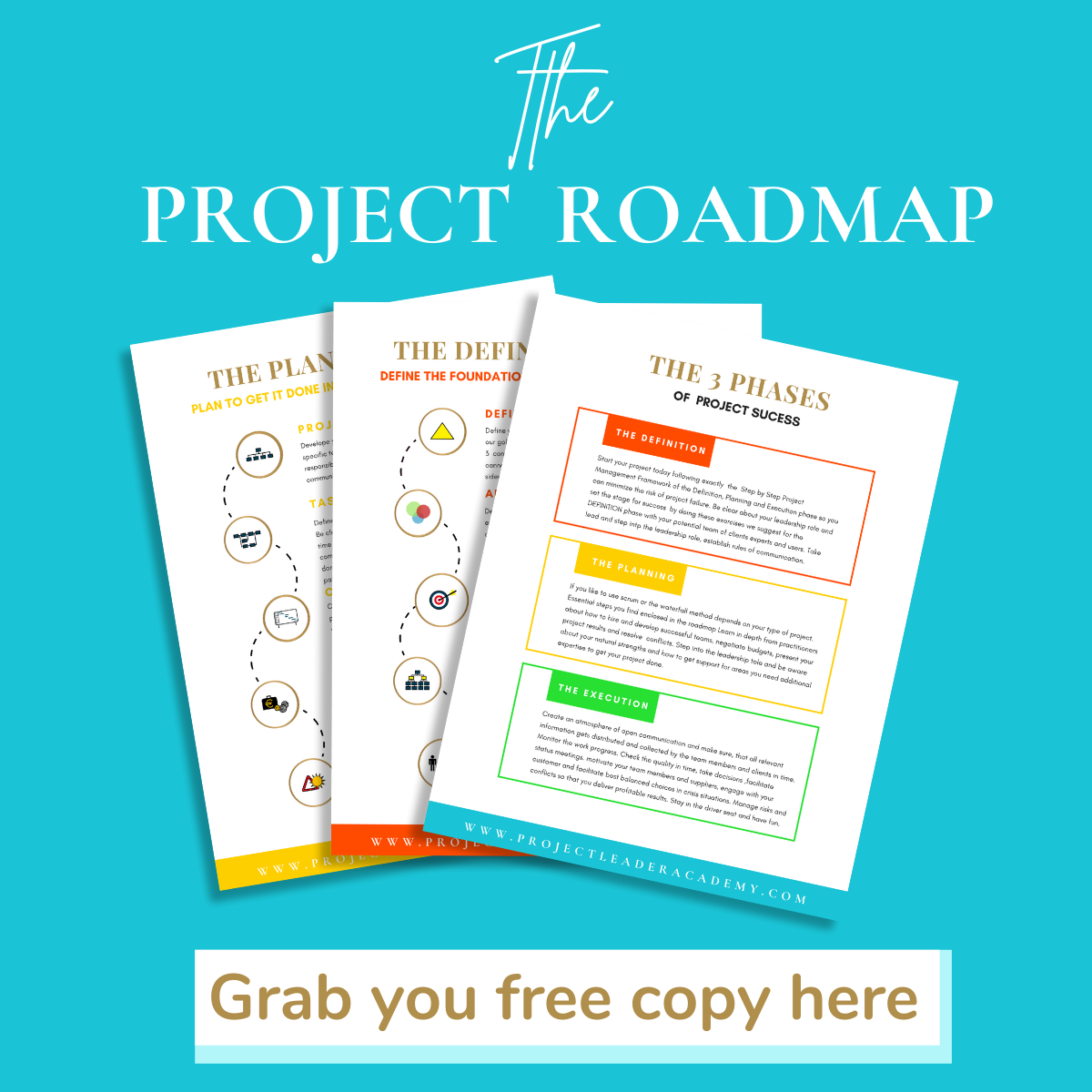
During our 20 years of project management training, we aimed to keep things simple and easy to understand. Our processes were designed to help, not restrict us. We created a 3-step Project Roadmap that worked for all industries. It helped us know where we were in the project, and people loved it so much that many offices have it on their walls.
Want more? Here's where to go next:
- Why Project Management Thinking Matters More Than Ever in the Age of AI — how the G.P.S. Systems dimension plays out when AI is part of your daily workflow.
- How to Lead When AI Changes Every Process (Without Losing the Human Touch) — the People side of leading through change, in more depth.
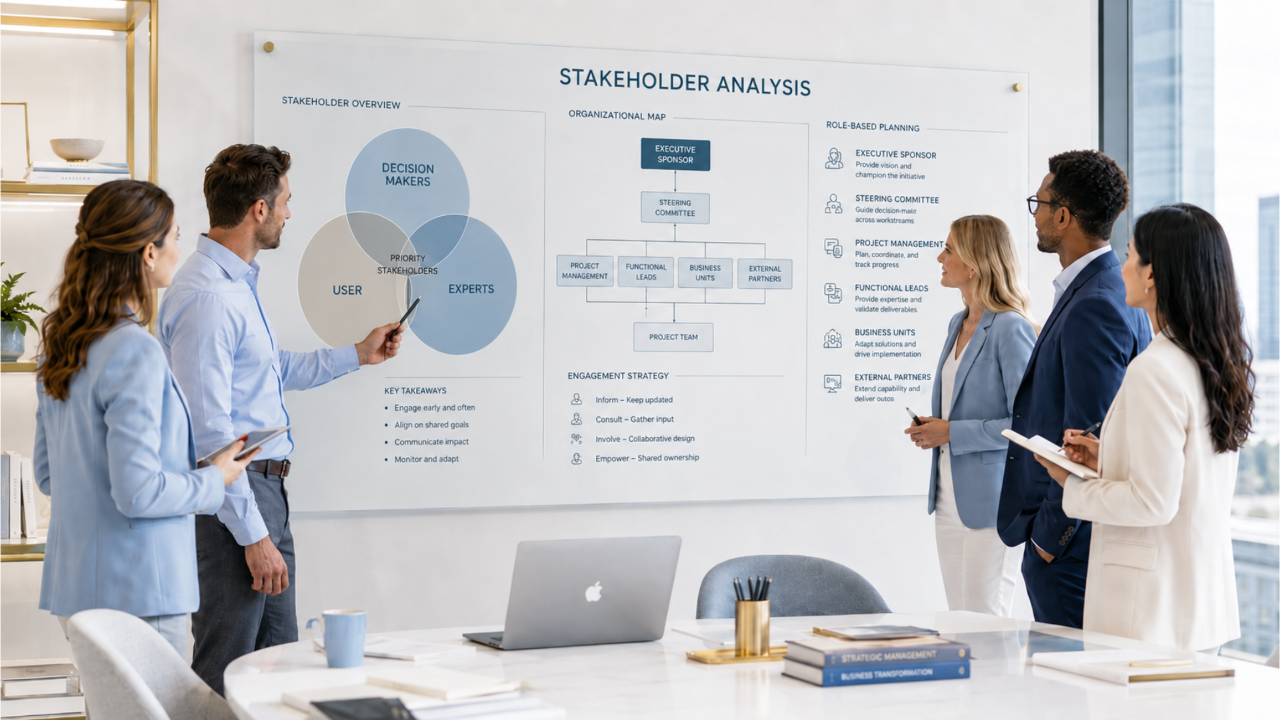
- What Is a Stakeholder? How to Identify, Map, and Manage the People Who Decide Your Project's Fate — a full breakdown of the stakeholder side of the People dimension, using this same G.P.S. lens.
Get your free Project Planning Checklist and make sure your next project is set up for success from the start!